Flying in winter
Winter brings special moments in the air — crystal-clear visibility, calm conditions, and unique atmospheres. At the same time, the cold season presents paragliders with special challenges. Our team pilots have summarized the most important tips for you so that you can take off safely in winter.
Body heat balance
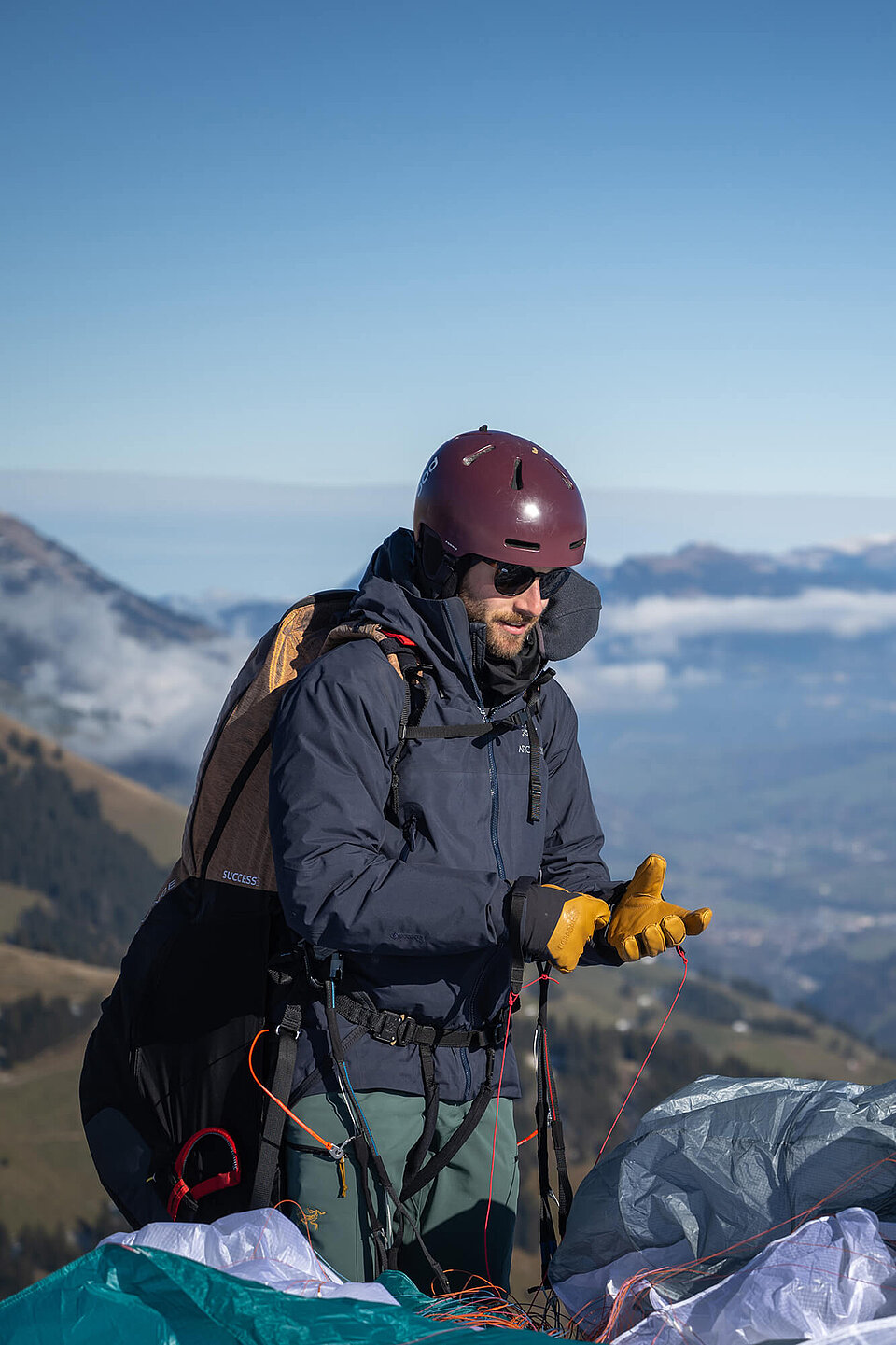
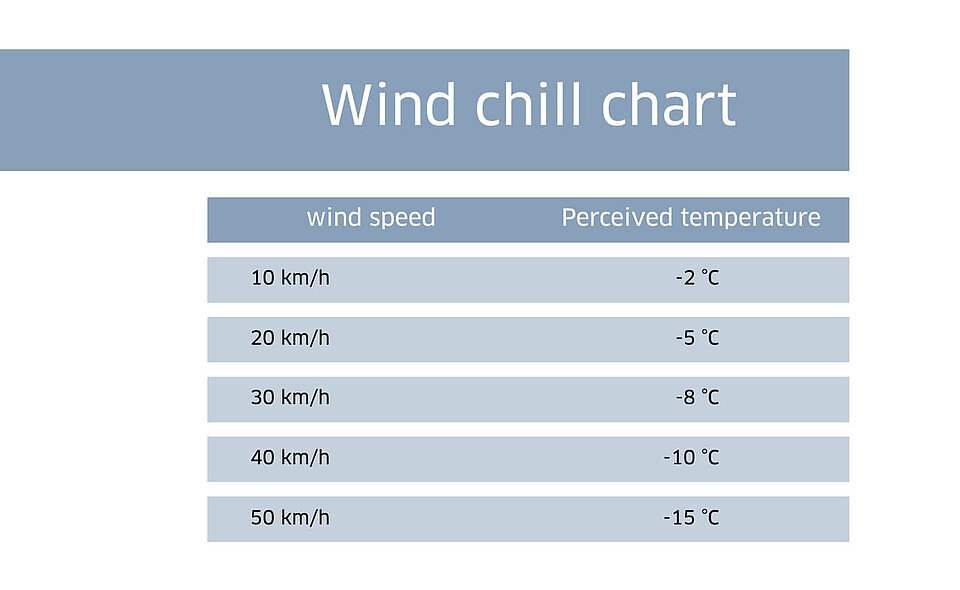
In winter, temperatures drop rapidly with altitude. This makes warm socks, layered clothing, and, above all, windproof, well-insulated gloves all the more important. The wind chill effect significantly increases heat loss, making the perceived temperature far lower than the actual air temperature. Therefore, make sure you stay warm in good time, for example with heat packs or heated gloves.
At the same time, the core effect plays a central role in heat regulation: if the torso cools down, the body reduces blood flow to the hands and feet. Cold fingers are therefore often a sign that the core is not sufficiently protected. Keeping the body warm overall not only makes flying more comfortable, but also allows you to fly longer.
FOG IN WINTER
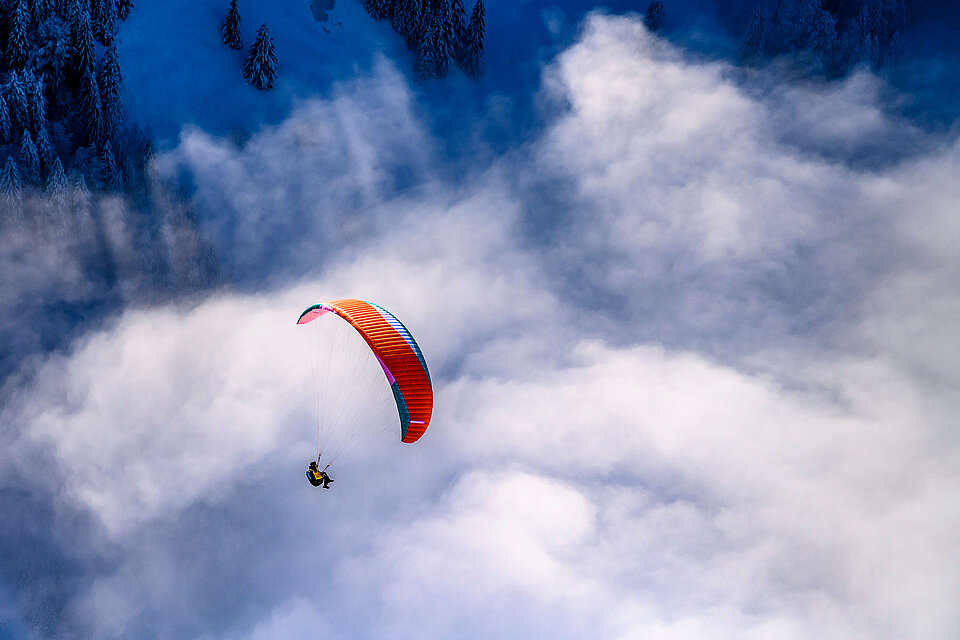
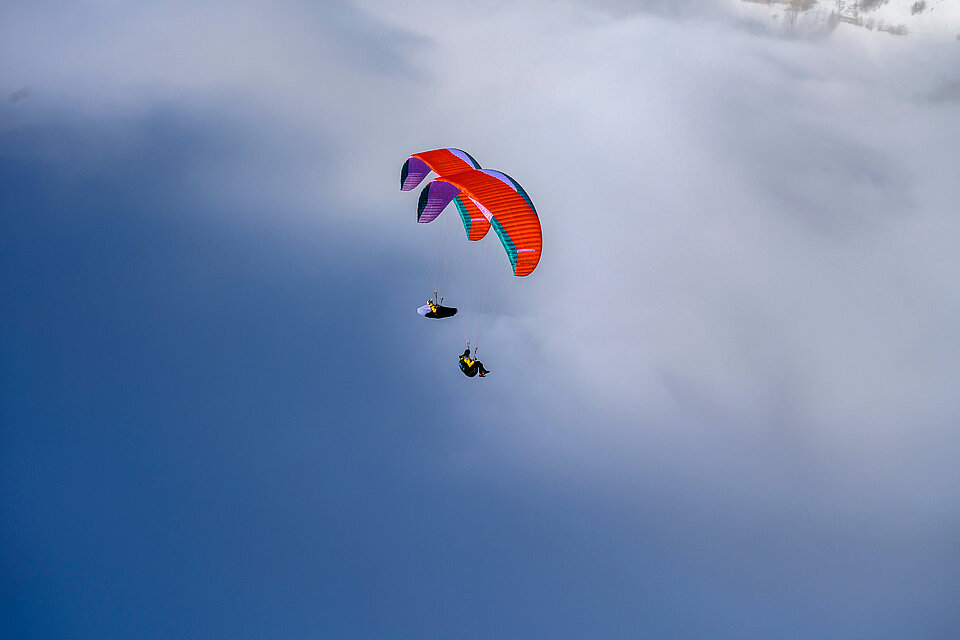
Fog occurs more frequently during the cold season and can extend all the way down to the ground. High fog layers and valley fog in particular can severely reduce visibility and make orientation difficult. Always check the latest weather information and only take off when visibility and safe landing options are clearly assured. Flying through fog can be dangerous, especially close to terrain.
Tips from the pros



Snow and ice
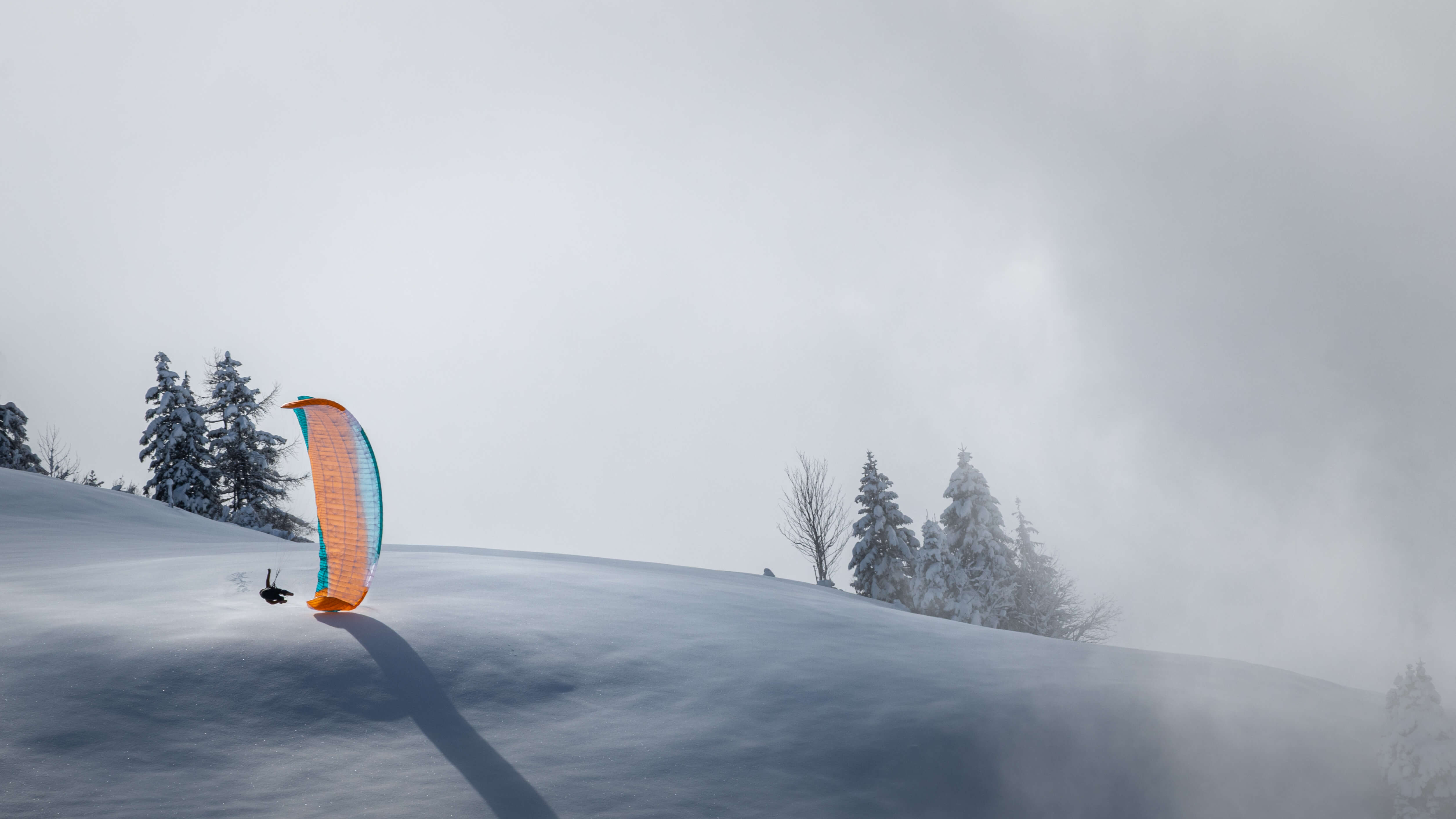
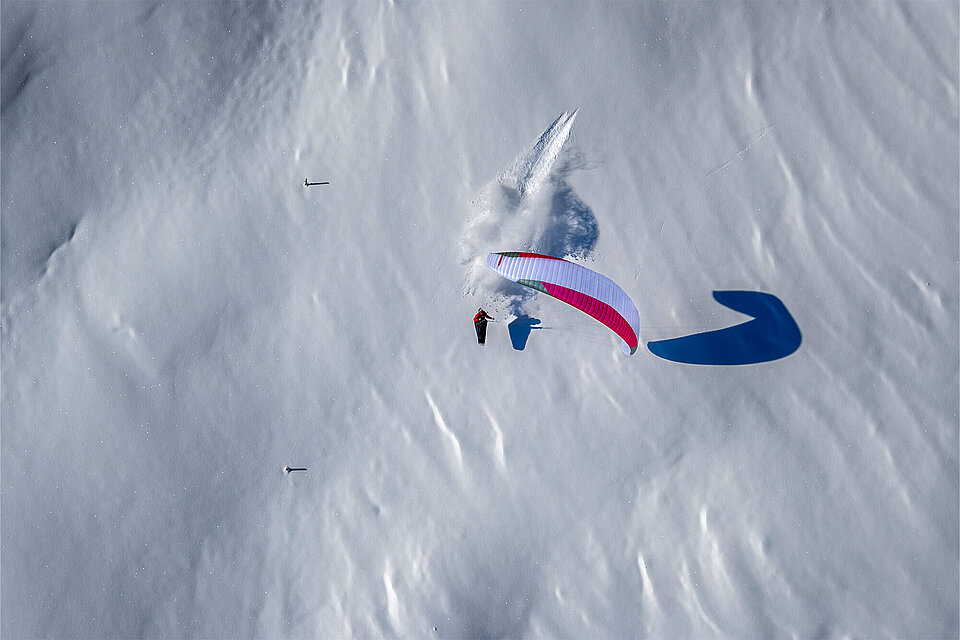
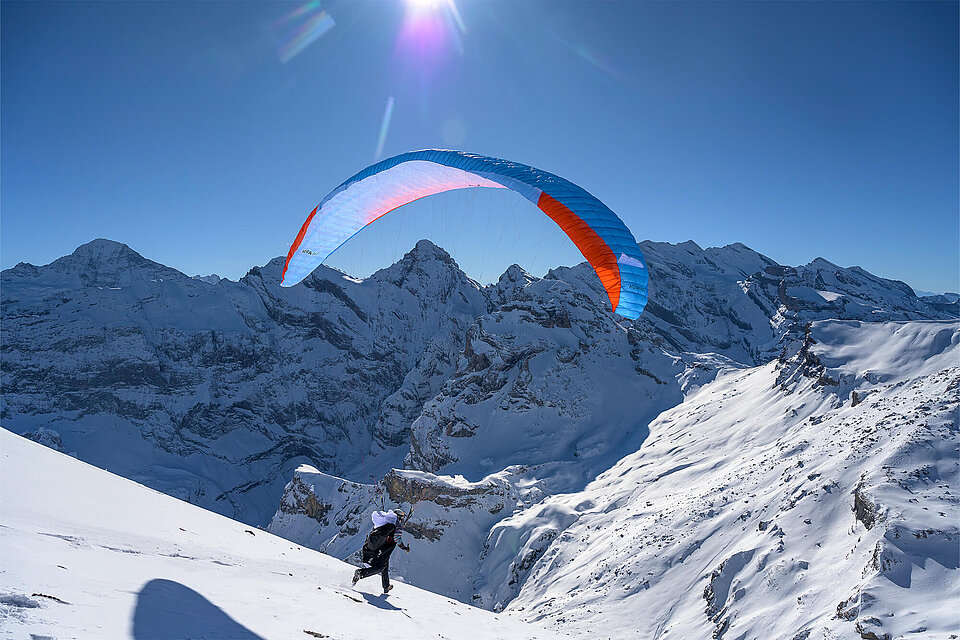
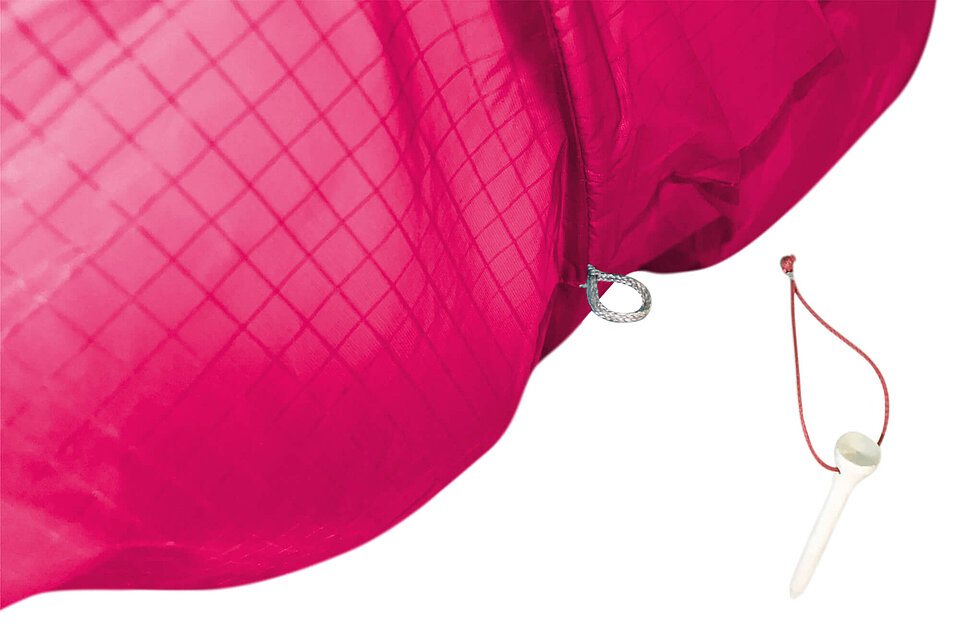
Snow in buckles and carabiners can freeze and impair their function – a real safety risk. Therefore, make sure that no snow gets into the fasteners and blow it out. Before takeoff, also check that all lines are running freely. They can easily get caught in frozen snow, which can lead to aborted takeoffs or even damage to the lines. If the glider slips away during takeoff, the leading edge can be fixed in the snow by hand at several points. Make sure that no snow gets into the canopy. Alternatively, snow pins can be used, which can be attached to the loops provided on the upper sail, for example on the PI.
Flying with skis
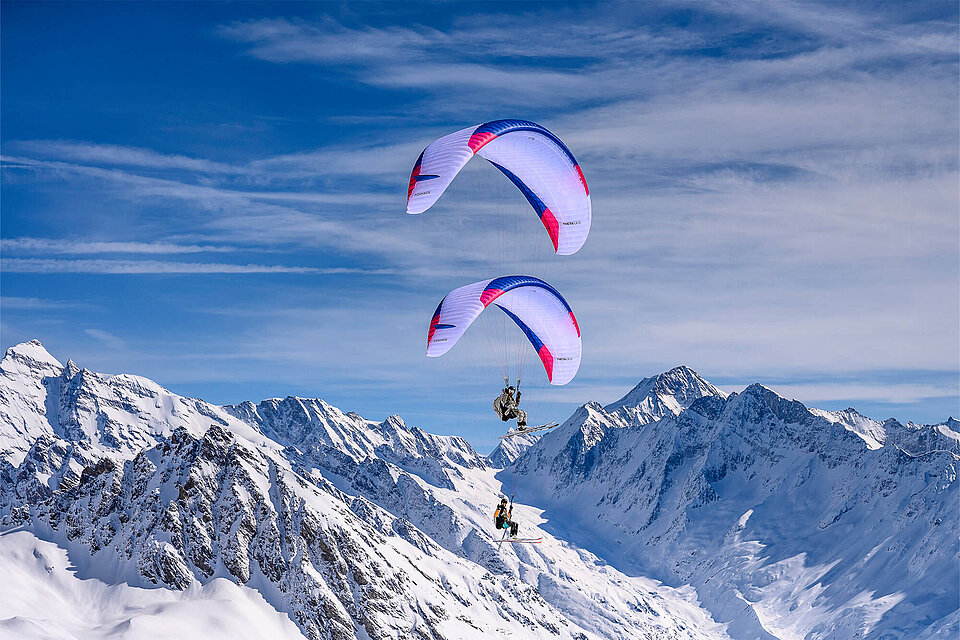
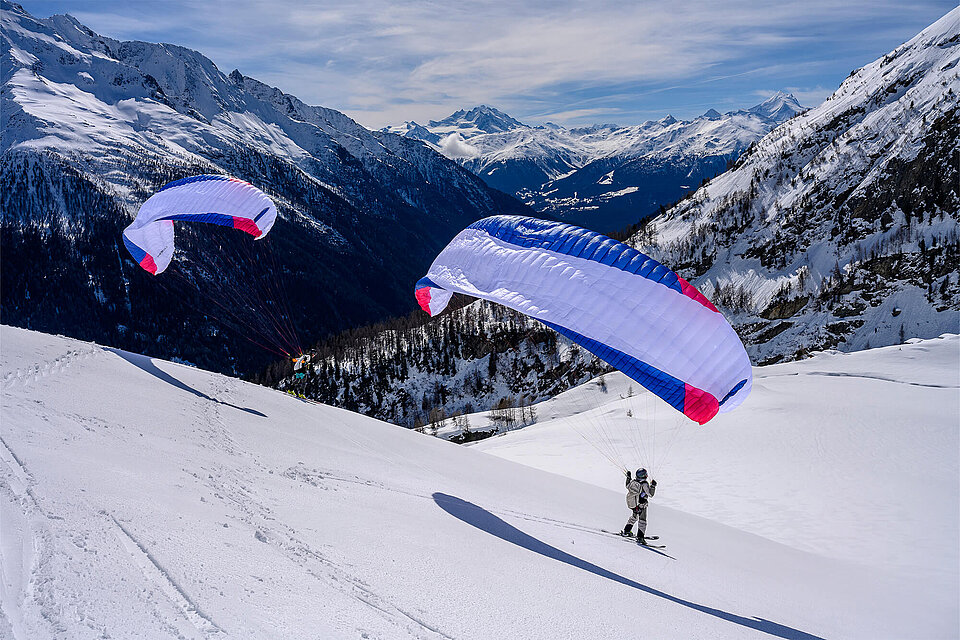
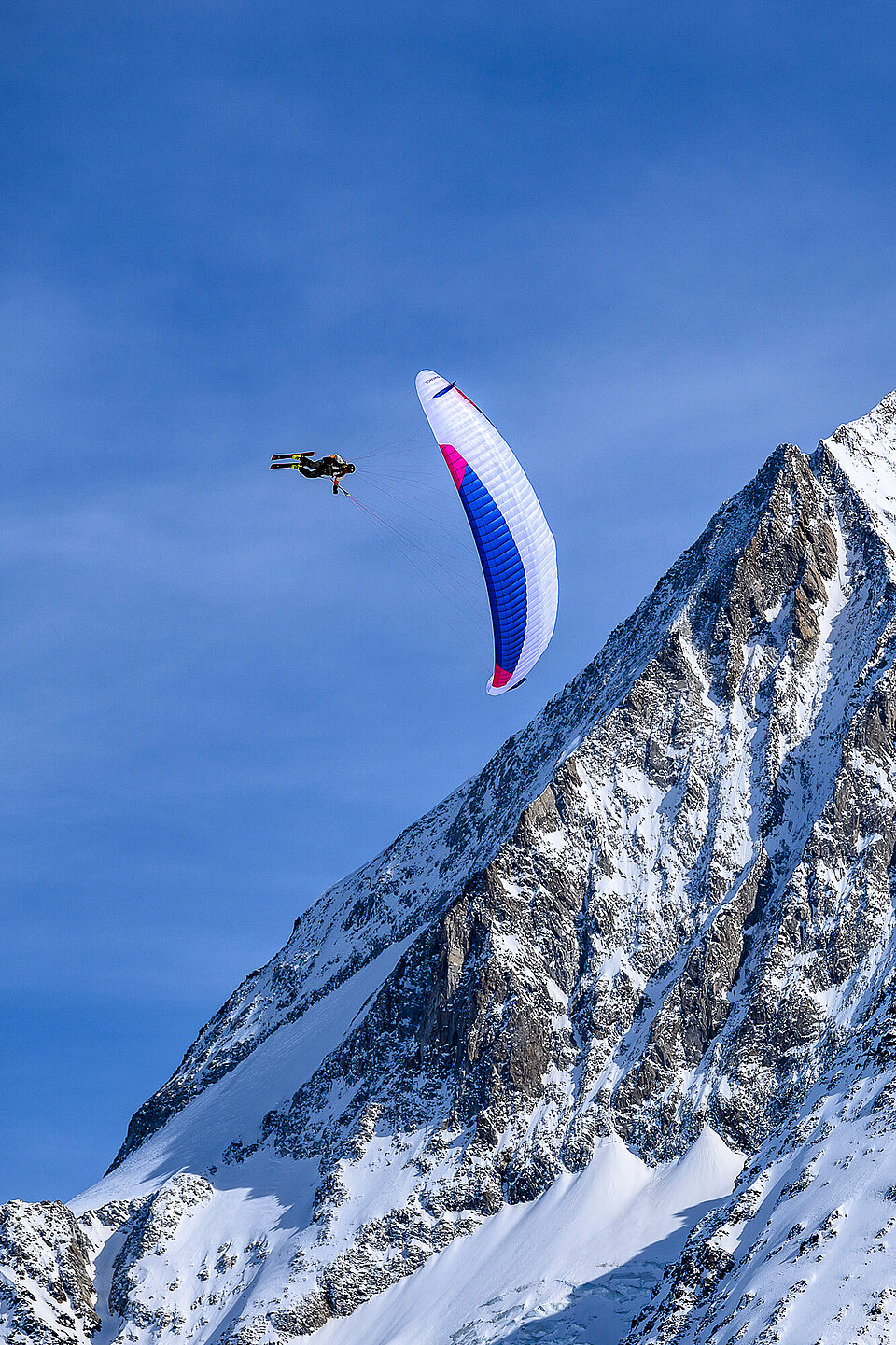
Before takeoff, bindings, attachment points, and freedom of movement should be carefully checked to avoid malfunctions during takeoff or landing. Takeoff with skis usually requires a longer takeoff phase, as acceleration is more gradual and less abrupt than with a foot launch.
A stable glider and a calm, clean launch technique are crucial. The landing phase is also significantly longer when landing with skis. Allow for sufficient run-out, keep the glider actively above you until you come to a stop, and be prepared for changing snow conditions to ensure control and stability until the end of the landing.
Air Density & Temperature
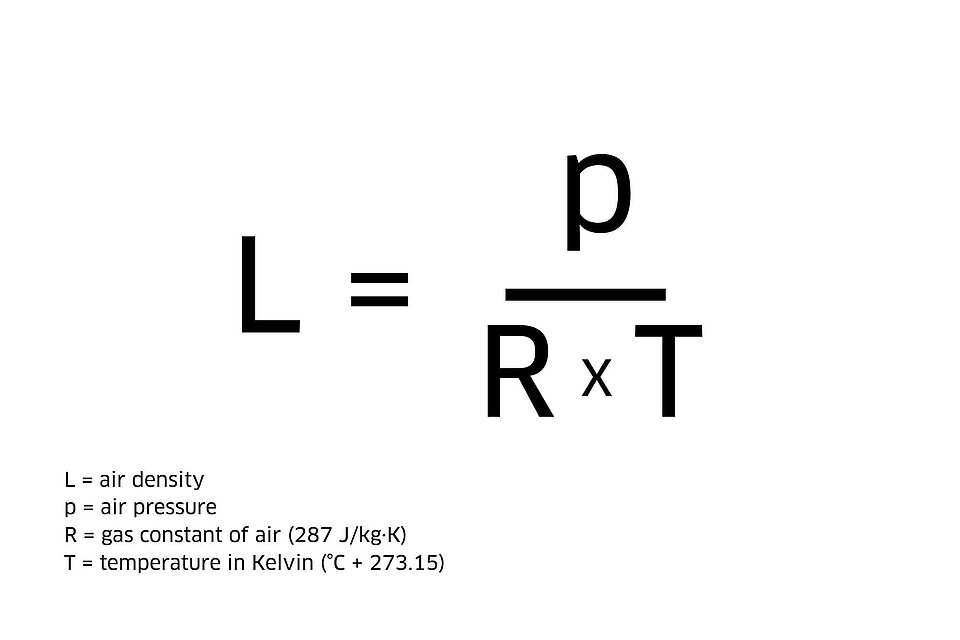
Air density directly affects the lift of a paraglider. Cold air is denser than warm air and generates more lift at the same airflow. This also affects speed: a glider that flies at around 40 km/h at 35 °C only reaches about 37 km/h at –5 °C. In practice, this means that in cold air, the wind strength at the launch site is often underestimated, which can be a safety issue. When soaring on a slope, however, less wind is needed on cold days to maintain altitude.