![[Translate to English:]](https://cdn.advance.swiss/fileadmin/_processed_/a/d/csm_Web_Stories_Cover_04_d75d633ad8.jpg "[Translate to English:]")
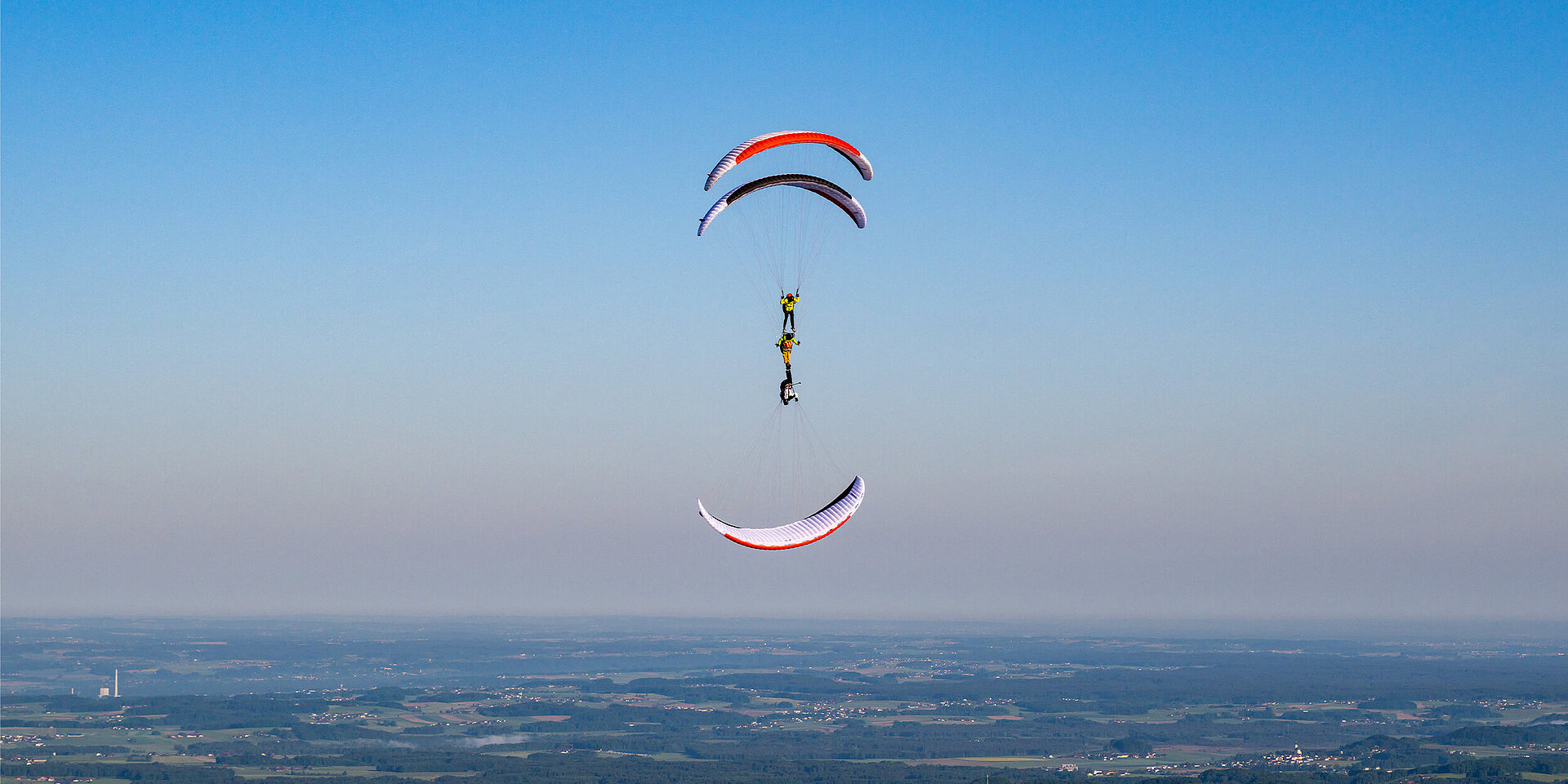
It’s a summer morning near Salzburg. The world is still sleeping, just a droning fan disturbs the silence. Slowly, the yellow balloon fills with air, and with it the sense of anticipation rises. Roland, Norbert and Max stand at the sides of the basket, ready for an adventure that is unusual, even for the acro scene. It's not the jumping together into space that's special, it’s what comes next: breathtaking, millimetre-precise manoeuvres while connected together in flight.
The moment of launch
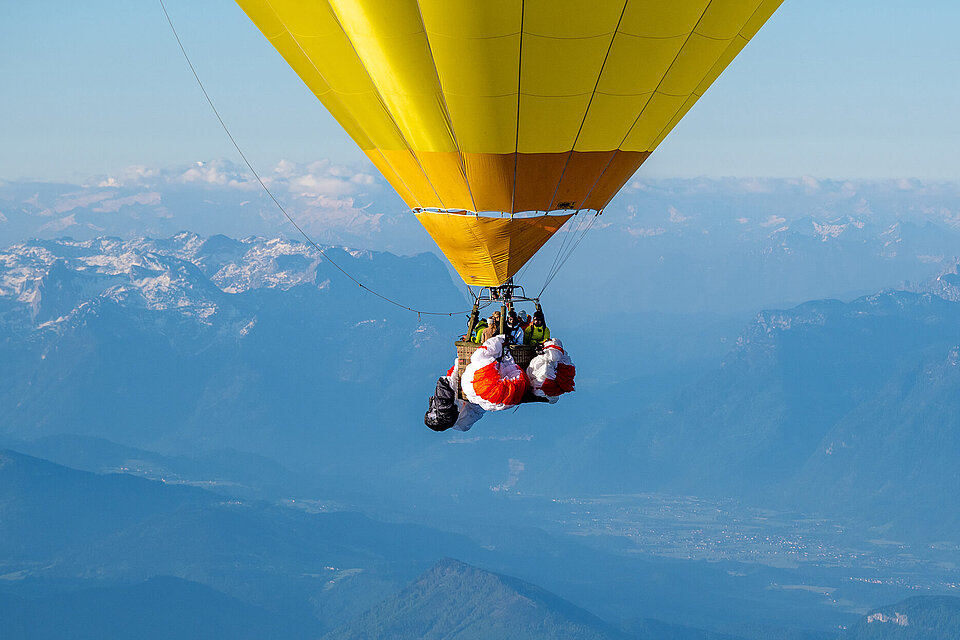
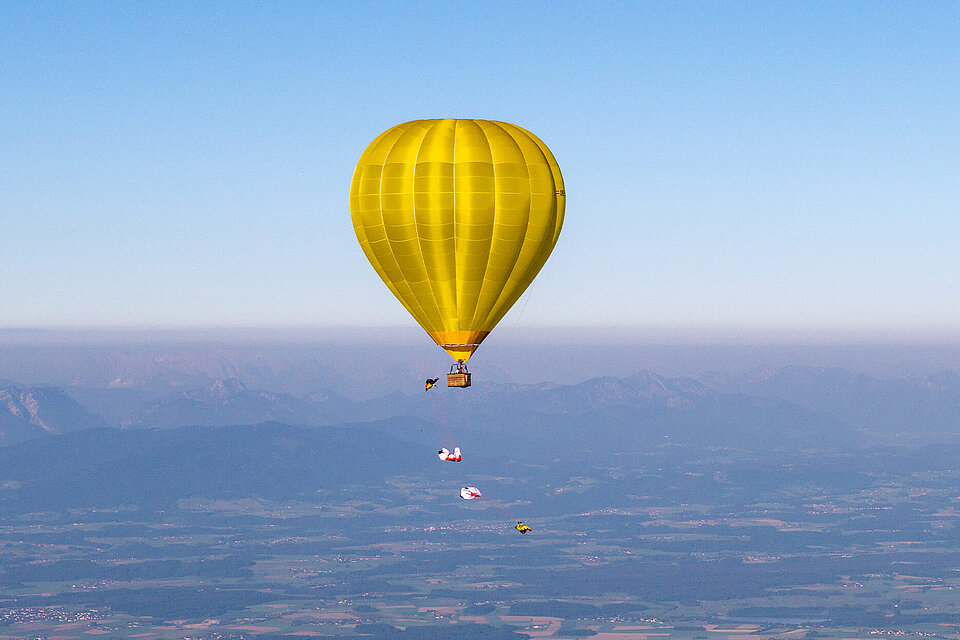
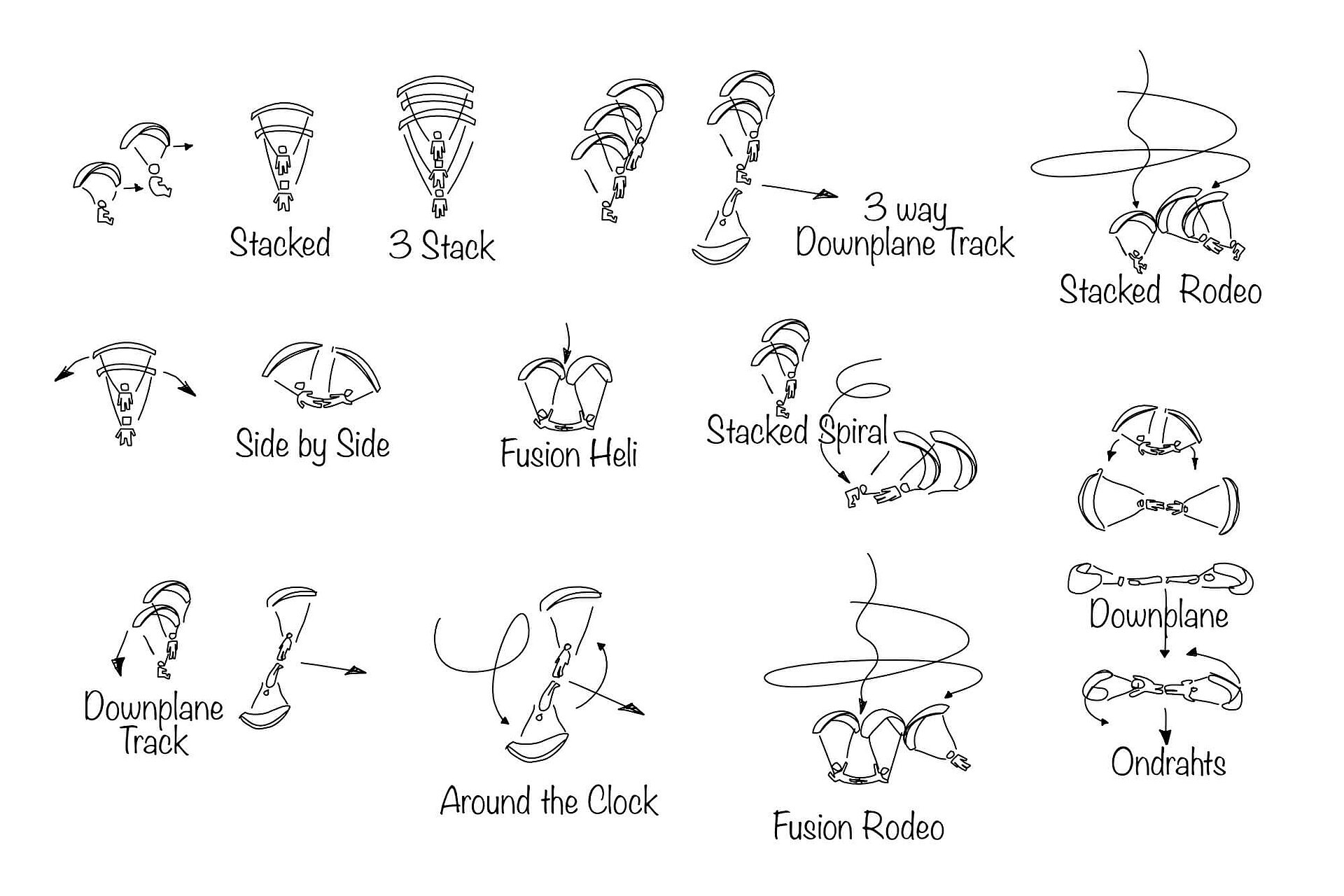
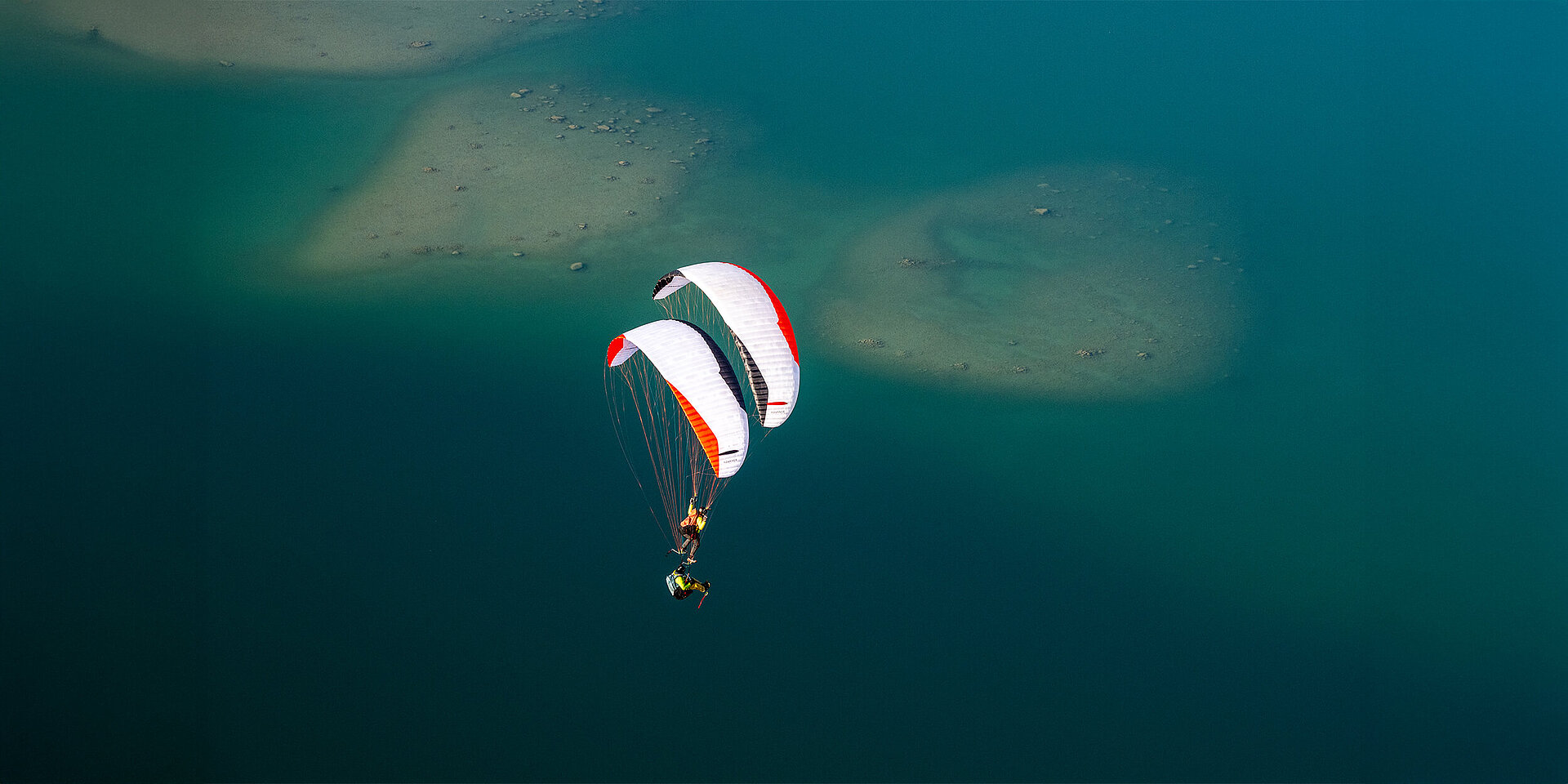
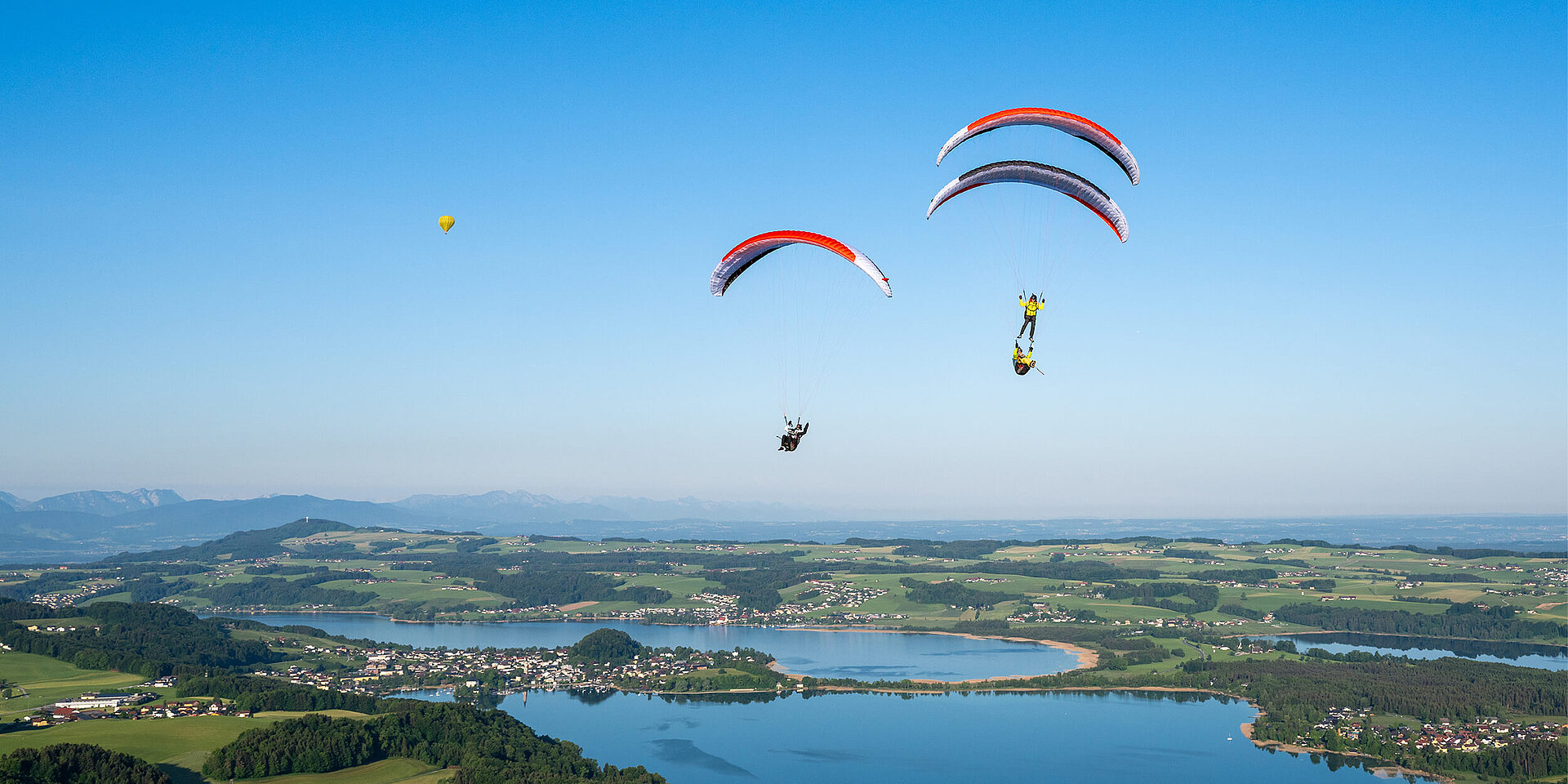
"So, we wait until we reach the altitude we need, then Norbert and I will climb on to the edge of the basket. Max, you follow us shortly after, then we will start the figures straight away." Three red and white paragliders are already hanging from the basket. When they reach the required altitude Roland and Norbert exchange a brief signal, then jump simultaneously in a rollover into the depths. Max follows seconds later. Norbert rapidly approaches Roland from behind and hooks his feet into Roland’s risers, performing the basic manoeuvre known as a “Kapperl.” Now Max also docks and moves into downplane from a side-by-side, flying upside down beneath his two friends. Three bodies, three wings – perfectly executed choreography.
Connected in the air
What looks like acrobatics requires the utmost concentration and complete trust: “Because we are connected to each other, we have to rely on each other one hundred percent,” explains Roland. Norbert adds: “We fly not only physically connected, but also mentally. We feel each other in the air.” Paul Doppler and Tom Hauthaler from Team Freestyle gave the trio their self-developed connection system and taught them how to achieve these flight positions. “Without this know-how, the whole thing would be impossible,” explains Roland, and Norbert agrees. What originally began as an experiment is now a new form of expression in paragliding. A symbol of what can be achieved when you rely on each other.
Magic at Dawn
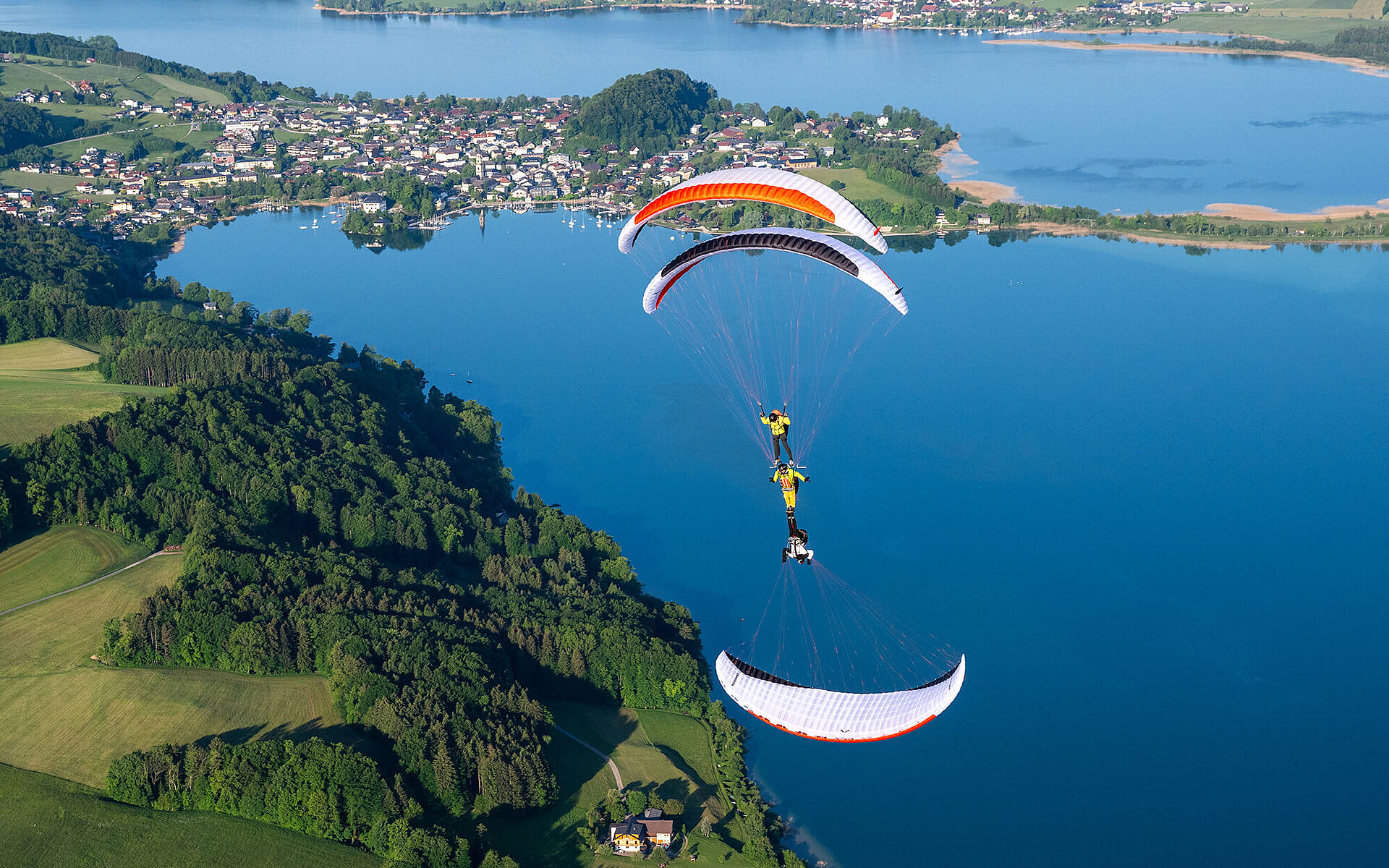
There’s magic in the air over Salzburg this morning. Below, a lake glistens in the soft morning light. Max, Roland and Norbert perform one manoeuvre after another, precisely timed and harmoniously coordinated. Every metre of altitude is used efficiently, because the rate of descent can be enormous during some of these link-ups. Then comes the finale: Norbert and Roland form up one last time and transition into an opposed downplane. This manoeuvre can only be flown in pairs. With their feet firmly connected, the two dive straight down at high speed while their gliders pull against each other horizontally – a spectacular sight.
Technique: total trust essential
Special equipment is needed to withstand the extreme forces: “For example, we have stronger lines on our canopies,” says Roland. The right equipment is crucial for such manoeuvres to succeed. Team Airbound flies with the Omikron acro model, which offers stability and allows additional aerobatic manoeuvres at shows. The three canopies are identical so that they react exactly the same in flight.
Return to Earth
They use up all their altitude in just a few minutes, having covered several thousand vertical metres with these manoeuvres. Still high in the sky, the yellow balloon floats as a tiny dot and will take a while to reach the ground. Roland, Norbert and Max are now gliding side by side and preparing to land. It is only 7:30 a.m., and for most people the day is just beginning. The trio is already delighted with this special training from the balloon. It has given them significantly more working altitude than is usually possible when flying from the mountains.
Pioneers of this discipline
What looks spectacular today at Team Airbound has its origins with the pioneers of the scene: Team Renegade and Team Freestyle. Starting in 2000, they transferred the principle of canopy-relative flying – pilots connected in the air – from parachuting to paragliding. With curiosity, testing and countless hours of flying, they made possible what was previously unthinkable. In 2023, they handed over their self-developed connection system and their knowledge to Roland and Norbert – and Team Airbound was born. Max joined a year ago. Since then, the trio has continued to develop the discipline and inspire audiences with impressive shows.
Aerodynamics on the limit
In the so-called downplane track, two connected gliders fly seemingly upside down towards each other – a sight that amazes even experienced pilots. But why doesn't the lower canopy collapse? The answer lies in aerodynamics: both canopies generate lift in opposite directions, resulting in a high relative speed in the overall system. This speed ensures that even at unusual flight angles, sufficient dynamic pressure is generated inside the canopies that they remain open.
The Team

Norbert Winkler
Norbert is a professional acro pilot and co-founder of Team Airbound. With breathtaking manoeuvres, he challenges the laws of physics. Together with Roland, he regularly secures podium finishes at international synchro competitions.
Max Martini
The talented acro pilot from Brazil became the third and newest member of Team Airbound in October. Max also works as a tandem pilot and SIV instructor and has made a name for himself through his YouTube channel.
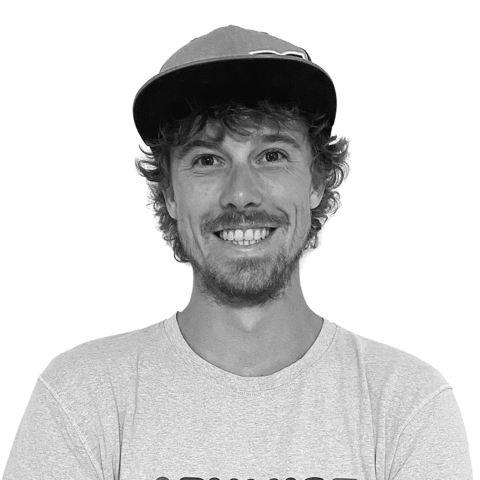
Roland Brunnbauer
Roland is anything but an unknown in the ACRO scene. He continues to prove his talent since his second place at the 2021 Synchro World Championships.